Blog
OpenAI DALL·E 3 and its applications in marketing - review of the image generator
12 lutego 2026
DALL·E 3 is a model for generating images from text descriptions, available in ChatGPT and Bing Image Creator, among others. In marketing, what matters is whether the tool delivers predictable results, allows quick creation of design variations, and can turn one idea into a series of materials without constant struggle over every detail. I tested DALL·E 3 from this perspective, creating graphics for social media, ad designs, thumbnails, illustrations for articles, and campaign concepts.
How does DALL·E 3 perform?
In short, it's good, but not perfect. Its biggest strength is its ability to capture composition and relationships between elements well. You can input a lot of information into the prompt at once:
- Who's in the scene?
- where they are located,
- what they are doing,
- what style the image should be in, and what the framing should be like.
Despite this layering, the resulting images often make sense and align with the description. OpenAI also emphasized that DALL·E 3 follows instructions better and can be guided through conversation in ChatGPT.
The downside is the strong moderation and limitations when it comes to sensitive topics or content involving well-known individuals or brands. Additionally, the images sometimes appear too artificial, more like renders than real photographs.
Text in images is better than before, but I would still treat it as an add-on to short slogans rather than a way to create fully polished typography.
How does DALL·E 3 work in practice?
The most convenient workflow is simple and similar to what works in other generators, like Midjourney, which I reviewed earlier.
- First, generate a base image with a clear composition and space for later text. Then iterate – create variations in framing, lighting, style, and background.
- Finally, refine the layout in a design tool where you have full control over typography, grids, and brand consistency.
In ChatGPT, the advantage is in conversation: you can point out what doesn't work in the result and ask for corrections without starting the prompt from scratch. In content work, this usually saves time as you refine details step by step.
If you need to bypass some limitations imposed in the conversation, you can also use Bing Image Creator. There, you can select a model, including DALL·E 3. It's a good option for quickly creating variations when ChatGPT starts to disappoint.
Where does DALL·E 3 excel in marketing?
I see the most value in materials where alignment with intent and composition is more important than photorealistic appearance.
DALL·E 3 excels in illustrations, conceptual scenes, memes, and graphics for storytelling. If you create educational content, carousels, blog posts, landing page hero images, or sets of shots for presentations, this tool can deliver quickly and without a long warm-up.
With product photos, results can vary. You can create aesthetic images in an advertising style, but often it feels like a generated image rather than a photograph. This can be a plus for performance campaigns to stand out, but not always for premium e-commerce.
Where can DALL·E 3 disappoint and how to work around it?
The biggest practical issue is moderation. If you work on topics that may involve well-known figures, brands, or sensitive elements, expect refusals. This can slow down work because instead of iteratingover the creation, you start iterating over the language of the prompt.
How I work around this in marketing applications:
- Instead of referring to specific figures or brands, I describe style and context - a comic series, drawing style, character type, mood, and era.
- Instead of asking for a literal logo, I request a blank space for the logo and describe the composition precisely for later editing.
- If I need a parody or meme, I go for a general scene and add text later in the editor.
The second issue is the text in the image. DALL·E 3 can handle short slogans better than older models, but I would still consider it risky in commercial work. The quickest way is to generate without typography and compose the final layout in a graphic tool.
The third issue is the effect of perfect artificiality. The model likes clean, symmetrical, heavily illuminated shots. For some brands, this is great. For some, it looks like a stock render. To work around this:
- Add more realism to the prompts – imperfections, natural light, grain, slight blurs, less symmetry;
- Maintain style – specific technique, specific aesthetics, specific optics, and framing.
4 marketing applications where DALL·E 3 provides quick results
DALL·E 3 delivers quick results when you need creative materials immediately, without involving a graphic designer in the early concept stage. It works especially well in four marketing applications.
Multiple ad designs in various iterations
One idea, several versions – different backgrounds, lighting, framing, emotion. Then choose a direction and have material for testing.
Consistent series of graphics for social media
Establish format, style, and composition, and create a pack for a week or a month. DALL·E 3 is better than many models, maintaining the sense of the scene, making it easier to build a series with a similar layout.
Illustrations for articles and newsletters
Here, you usually don't need hyperrealism. You need a clear metaphor and readable composition. DALL·E 3 delivers this quickly.
Visualizing campaign ideas for team or client presentations
Instead of describing concepts, show 6-10 images that set the tone. This speeds up the decision-making process.
Cost-effectiveness from a marketer's perspective
If you use DALL·E 3 occasionally, it's best to have it where you already work through conversation and treat graphics as an add-on to the process. When you need more scale, automation, and a consistent approach to image cost, an API makes more sense.
For OpenAI image models, the price of generation depends on size and quality level. In typical settings, it's usually in the range from a few cents to a dozen cents per image.
In practice, it makes sense when you regularly create designs and variants. If you need 1-2 graphics a month, it's often quicker to reach for stock and refine it manually.
Marketing-focused prompts – testing DALL·E 3
The following prompts are written to generate images ready for use in advertising or social media, without asking the model for typography in the image. Leave space for text and logo in post-production.
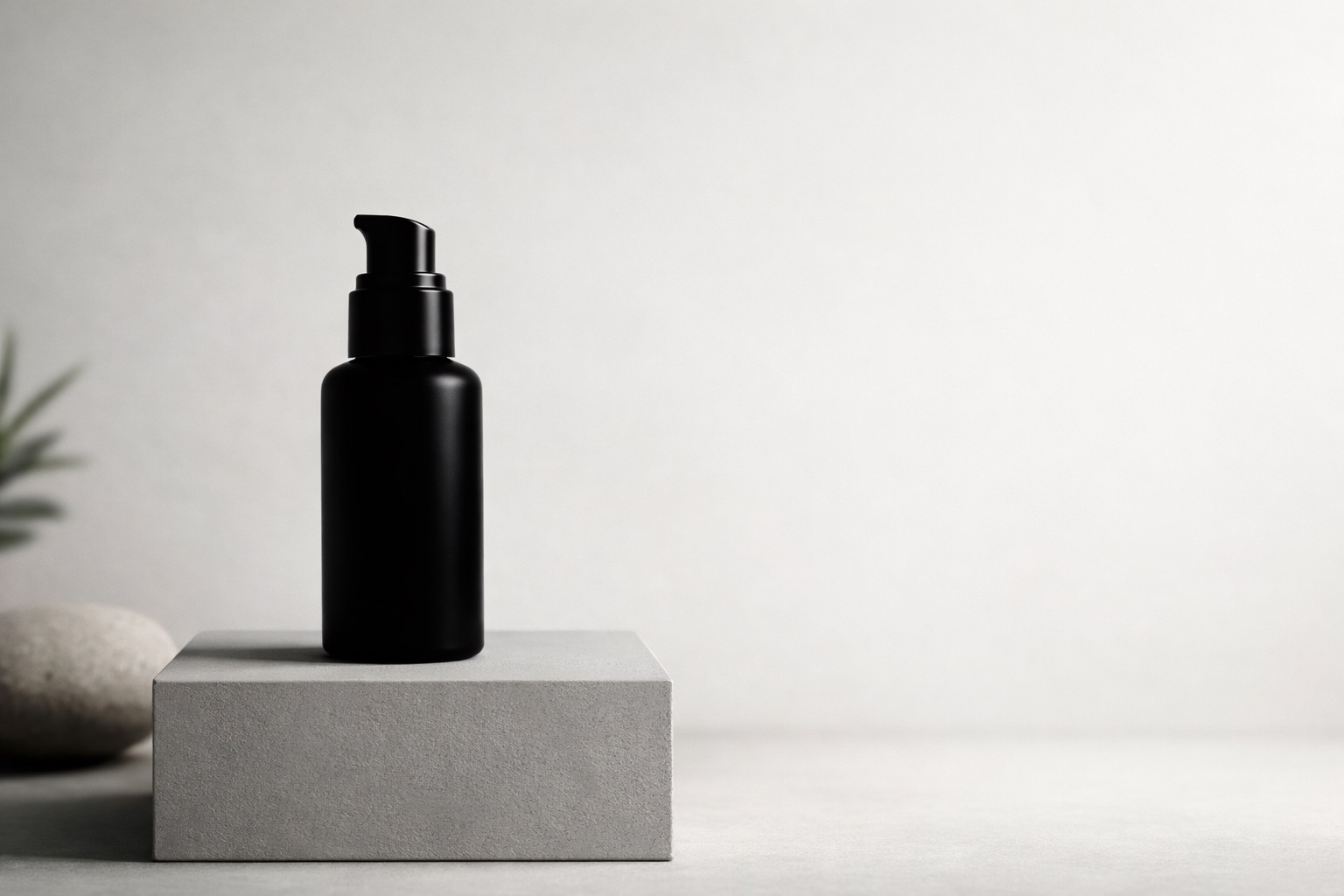
Premium product advertisement aesthetics
High-end product advertising image, photorealistic studio scene. Place a single unbranded product silhouette centered on a matte pedestal, clean neutral background, soft diffused professional lighting with gentle highlights and natural shadows, controlled reflections, shallow depth of field. Leave generous negative space on the right side for later headline placement. Minimal props, no logos, no labels, no typography, no watermarks. Crisp detail, commercial-grade composition, 16:9.
Lifestyle app ad design
Lifestyle advertising scene of a person using a smartphone in a modern home environment, natural morning light through a window, warm realistic atmosphere, candid yet polished commercial look. Focus on hands and phone interaction, modern interior with subtle details, background slightly blurred. Leave empty space at the top for a future headline, no on-image text, no logos, no brand marks, 4:5 composition suitable for social ads.

Illustration for a marketing analytics article
Modern conceptual illustration for marketing analytics, clean and readable composition. Show abstract but recognizable elements: dashboards, charts, conversion funnel icons, performance indicators, and data flow lines. Use a contemporary flat-meets-3D style, high contrast between foreground and background, plenty of empty space for captions. Avoid tiny unreadable text. No brand logos, no typography, no watermarks. Square 1:1.

Hero image for an article about AI in marketing
Editorial hero image illustrating AI in marketing: a human silhouette and a neural network motif interacting with campaign assets (ads, social posts, email cards) arranged as floating cards. Modern, minimal, high-impact composition with strong focal point and uncluttered background. Subtle cinematic lighting, slight grain for realism. Leave clear negative space for a title bar. No logos, no text, 16:9.

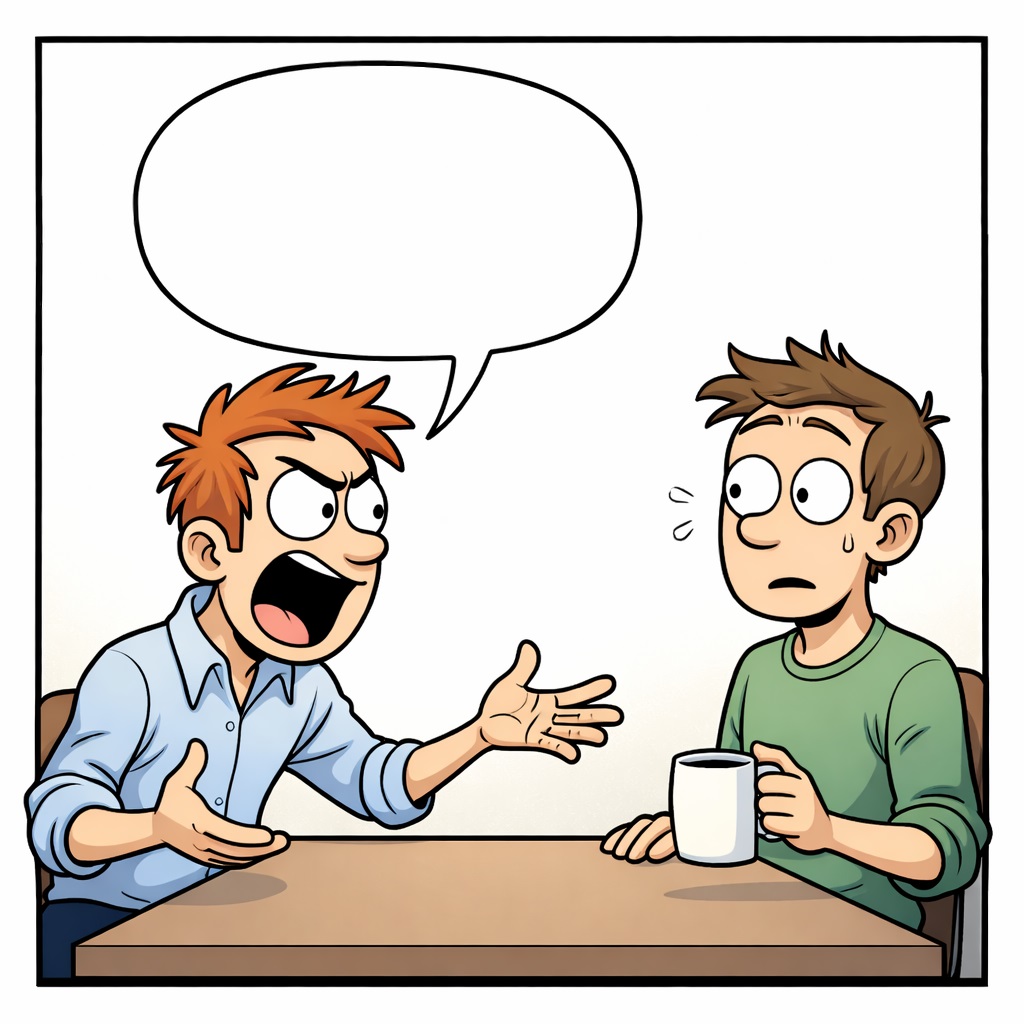
Memes and comics for social media
Single-panel comic style, clean linework, high readability. Two characters in a simple scene, exaggerated expressions, clear staging, minimal background. Keep the composition centered and leave a blank speech bubble area (empty bubble, no text) that can be edited later. Consistent cartoon style, high contrast, no copyrighted characters, no brand logos, 1:1.
How to improve result predictability?
If you want less frustration, stick to rules that realistically save time:
- Composition first, details later. If you put too many micro-details into the prompt, the model will start choosing what's important for you.
- Don't ask it to do typography. Treat the generator as a source of the image, not a finished creation.
- Describe what should be in the frame in a photographic or layout language: framing, perspective, negative space, light, depth of field. This usually works better than poetic metaphors when creating campaign materials.
Summary of DALL·E 3 review
DALL·E 3 excels in prompt comprehension and composition. If your work involves quickly transitioning from idea to image, creating variations, and building a series of graphics, it is a tool that can realistically speed up work.
For those expecting photographs indistinguishable from real ones or full control over detail and editing, it may be a compromise. DALL·E 3 is strong in content marketing and social media but weaker where perfect product photography and uncomplicated work on limited topics are key. Also, remember that the model is not intended for generating videos – that's where the OpenAI Sora model comes in.
Pros and cons of DALL·E 3
Advantages:
- very good understanding of the scene and relationships between elements;
- quick delivery of sensible concepts for campaigns and content;
- convenient iteration in conversation mode in ChatGPT;
- strong material for memes, comics, and simple illustrations.
Disadvantages:
- Restrictive moderation can slow down the work pace.
- images often look like renders rather than real photos;
- does not generate videos;
- text in images still has limitations, especially in longer slogans;
- limited editing control when you want to precisely adjust details.
Rating of individual aspects of DALL·E 3
Below are ratings for marketing applications in terms of work speed, result predictability, and usefulness in designs.
| Aspect | Rating (0-5) |
|---|---|
| Ease of use | 4 / 5 |
| Image quality | 4 / 5 |
| Prompt fidelity | 4 / 5 |
| Control and editing | 3 / 5 |
| Speed of generation | 4 / 5 |
| Styles and personalization | 4 / 5 |
| Collaboration and community | 4 / 5 |
| Cost-effectiveness | 4 / 5 |
Overall rating of DALL·E 3 : 3.9 / 5
The model is very useful for quick content and design creation, but it loses points for editing limitations and the fact that sometimes you struggle more with the platform than with the graphics themselves.
Midjourney - review of image and video generator.
Previous
How to Choose an SEO Consultant for a FinTech Company in 2026
Next

Mateusz Rzetecki
SEO expert with 10 years of experience
Also read

SEO guide for e-commerce, i.e. online store optimization in a nutshell, part II
This is the second part of a series of articles devoted to the optimization of online stores. For those who have not yet had the opportunity to read the previous part, here it is: SEO guide for e-commerce, part I.

How to check if a website has a manual or algorithmic filter?
Are you the owner of a website or online store? Have you noticed a drop in your position in natural search results?
